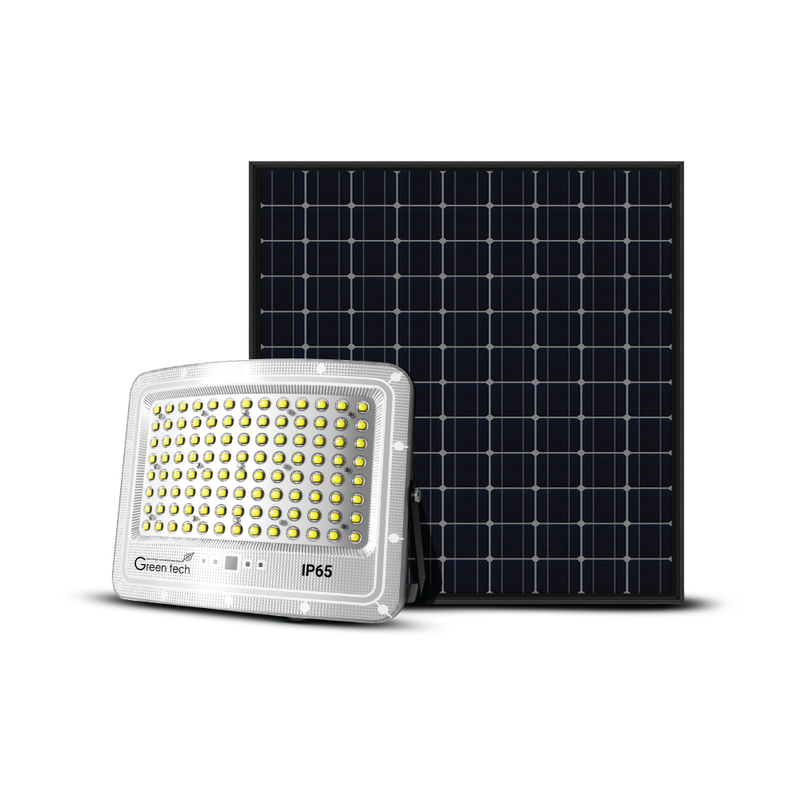
Solar floodlights and wall lights
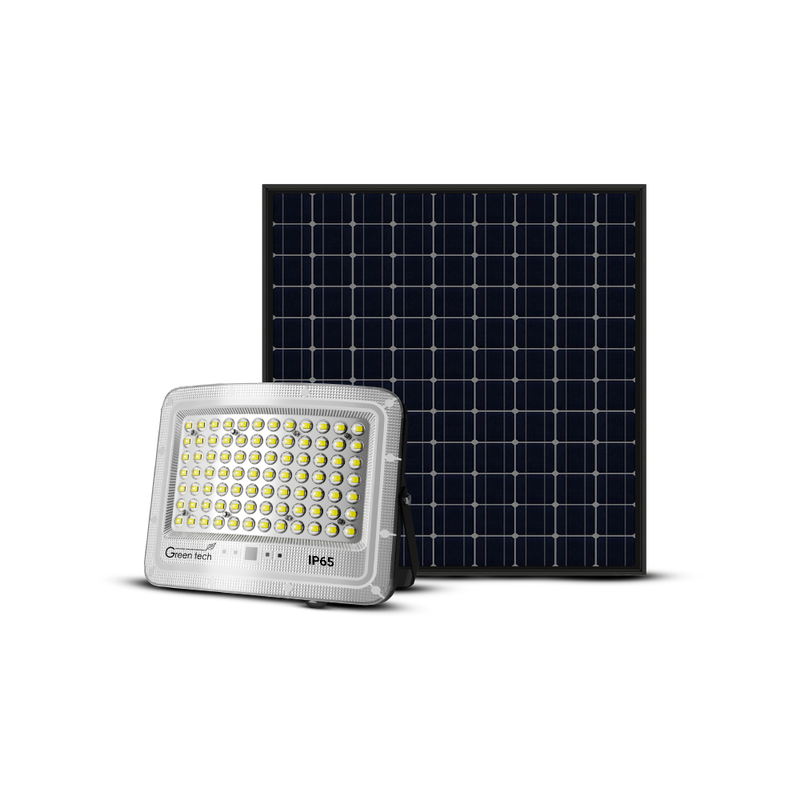
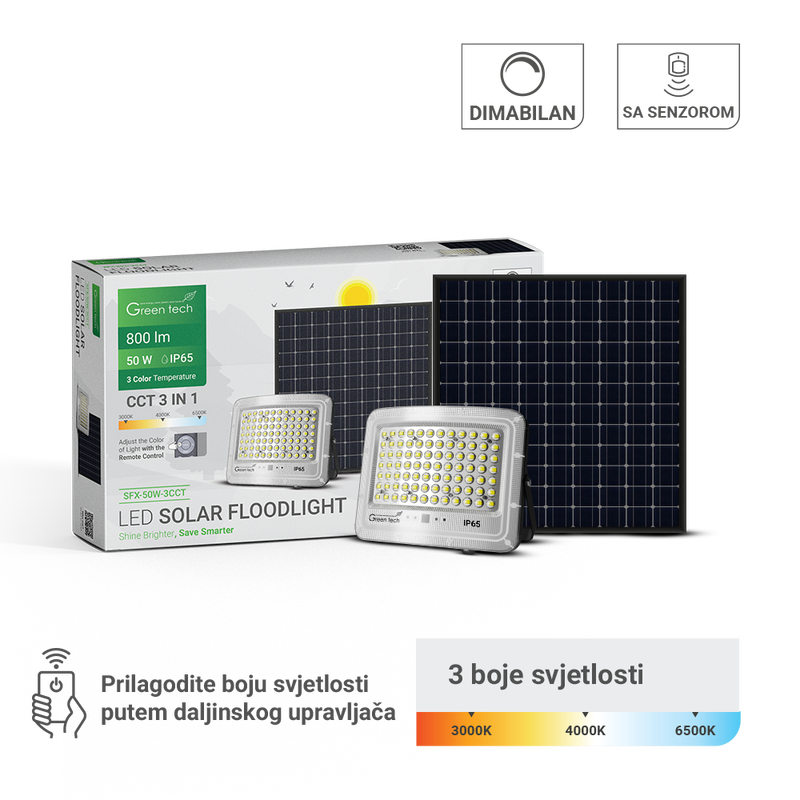
LED solarni reflektor 200W, 3CCT, IP65
- 3000 K - 4000 K - 6500 K
- ABS + PC
- 200 W
SFX-200W-3CCT Learn more
The bathroom is the most demanding room for lighting — moisture, steam, and electricity demand a precise understanding of IP ratings and safety zones. Learn which LED fixtures are code-compliant and visually optimal.
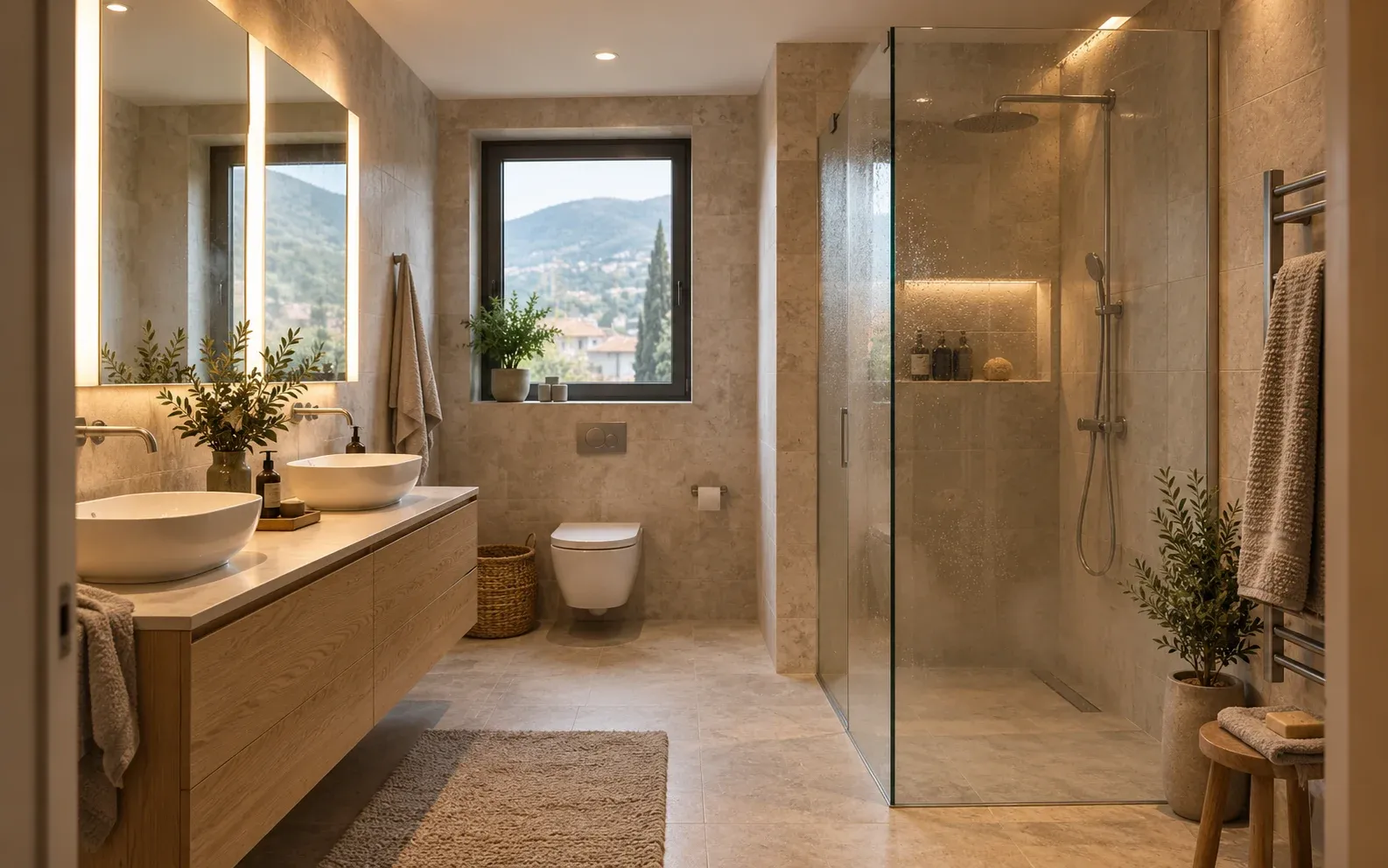
When you're choosing LED lighting for a bathroom, you're facing a challenge that doesn't exist anywhere else in the home: water and electricity sharing the same space. Steam from showers, splashing around the basin, and condensation on cool walls create an environment where a standard living-room fixture can be genuinely dangerous — or flatly illegal under building regulations.
The good news: modern LED technology offers a strong selection of fixtures designed specifically for wet and damp locations. The key is understanding IP ratings and bathroom safety zones, then matching the right light to the right location.
IP stands for Ingress Protection, defined by the international standard IEC 60529. The rating describes how well an electrical device resists solid particles and liquids. The mark takes the form IPXY.
For bathrooms, these ratings matter most:
The rule is simple: higher number equals better protection. IP44 is the minimum for most bathroom lighting positions, but anything directly above or adjacent to a shower or bathtub requires IP65 or better.
Wiring regulations (BS 7671 in the UK, IEC 60364-7-701 across the EU, and equivalent local codes throughout Bosnia and Herzegovina and the wider region) divide the bathroom into four zones based on proximity to water sources.
Important: These zones and IP requirements are minimum technical standards. Always consult a qualified electrician familiar with current local regulations before any installation.
In zones 0 and 1, current regulations require SELV voltage (Safety Extra-Low Voltage) — typically 12V DC. The reasoning is straightforward: at 12V, even in the event of a fault or contact with water, the risk of a fatal electric shock is dramatically reduced.
Installing a 12V SELV system requires a transformer or LED driver that steps down the mains 230V to a safe low voltage. That component must be located outside zones 0 and 1 — usually in the ceiling void or in an electrical cabinet.
This is not a DIY project. Work inside zones 0 and 1 must be carried out exclusively by a licensed, qualified electrician.
The bathroom serves two distinct purposes — you prepare for the day in the morning and unwind in the evening. Color temperature (measured in Kelvin, K) directly affects both how well you see and how the space feels.
Green Tech recommendation: Combine 3000 K general ceiling lighting with 4000 K dedicated mirror lighting on a separate switch — you get comfort and accuracy without compromise.
CRI (Colour Rendering Index) measures how faithfully a light source renders colors compared to natural daylight (CRI 100 = perfect match). For bathrooms the rule is simple:
Always check the CRI value on the packaging or datasheet. All LED products in our catalog include clearly stated CRI values in their specifications.
The mirror is the functional center of the bathroom — grooming, makeup, skincare. Yet most bathrooms lit by a single ceiling downlight suffer from the same problem: shadows under the chin, nose, and eyes because light arrives from directly overhead.
For a broader perspective on choosing the right light for every room, see our guide on light color temperature by room.
Recessed LED downlights are popular in bathrooms because they are visually minimal and distribute light evenly across the room. Key things to verify before purchasing:
Our guide on how to choose LED lighting for your home covers the full selection process room by room.
Wattage (W) is not a measure of brightness — that's luminous flux in lumens (lm). For bathroom planning:
A useful rule of thumb: allow approximately 400–600 lm per square meter of bathroom floor area for comfortable general lighting.
Zone 1 — directly above the bath or shower up to a height of 2.25 m — requires a minimum of IP65. This means the fitting is fully dust-tight and protected against water jets from any direction. Any LED fitting with a lower IP rating in this position is non-compliant and poses a genuine safety risk.
IP44 is sufficient for Zone 2 (within 60 cm of the bath or shower edge) and for the general bathroom area beyond the zones. If your ceiling fixture is not directly above the bath or shower and sits further than 60 cm from the edge, IP44 meets the minimum requirements. That said, IP65 always offers better protection and longer service life in humid conditions.
Fixtures located outside zones 1 and 2 can be installed by a competent DIYer with basic electrical knowledge, provided the circuit is fully isolated at the consumer unit first. However, any work in zones 0 and 1 must be carried out by a licensed electrician — this is not a recommendation but a legal requirement in BiH and across the region. Most home insurance policies also exclude damage caused by non-compliant electrical installations.
For precise makeup and grooming, 3500 K to 4000 K with CRI 90+ is the standard recommendation. This closely matches natural daylight, rendering skin tones, lip colors, and foundation shades accurately. Avoid warm amber light below 2700 K for vanity zones — skin can appear healthier than it looks in natural light, leading to over-application.
For a bathroom mirror, aim for 800 to 1200 lumens distributed along the vertical axis at face height — ideally from both sides. A single 600 lm spotlight overhead will create shadows. A linear LED bar or two flanking wall sconces spread the same output far more evenly.
Safe, functional, and visually appealing bathroom lighting starts with the right product in the right zone — and the right installation. Browse our LED lighting catalog to explore available models with clearly listed IP ratings and full technical specifications.
For advice tailored to your specific project, or to request availability information on a particular model, contact us directly or find an authorized partner near you — our network covers Bosnia and Herzegovina and the wider region.
Disclaimer: All electrical installations in wet and damp locations, particularly zones 0 and 1, must be carried out by a licensed electrician in accordance with applicable local regulations. The information in this article is educational in nature and does not replace professional assessment or installation supervision.